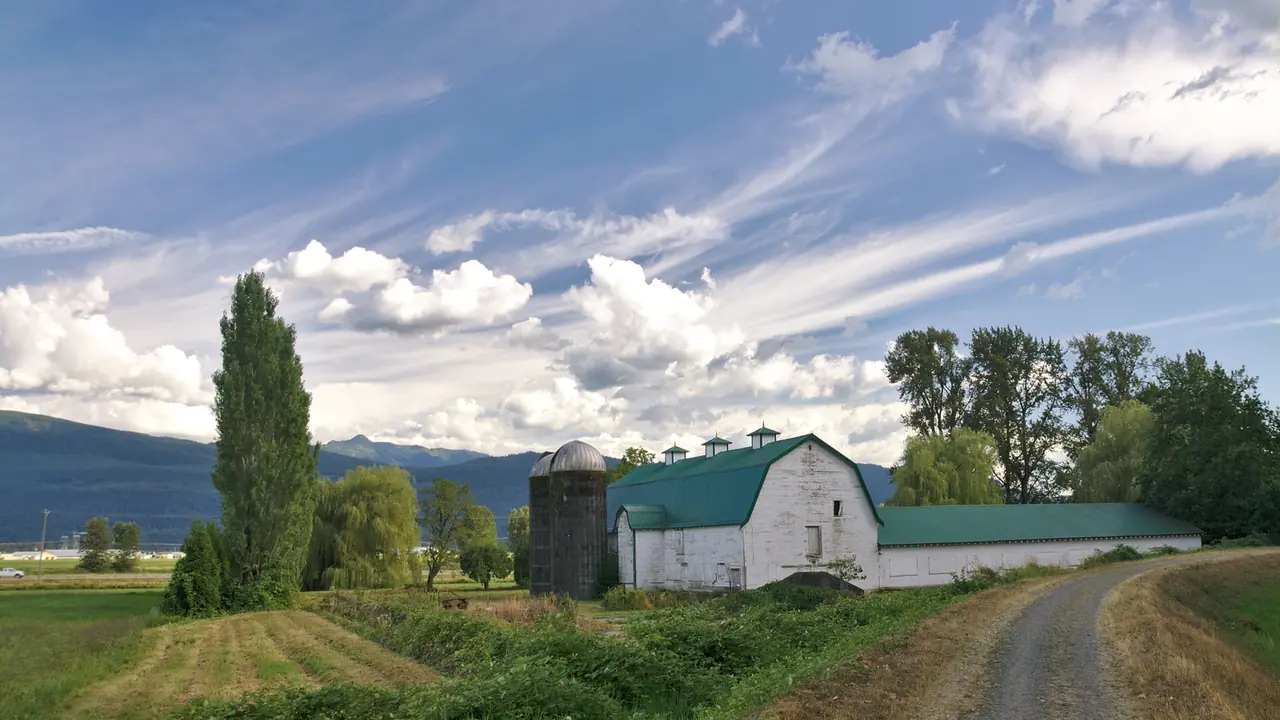
Agriculture comes first
Visitors should understand Sumas Prairie primarily as working farmland. Agricultural vehicles, farm access and private property take priority over sightseeing.
Use public-facing farm businesses when you want an agritourism experience rather than stopping randomly along rural roads.
Flood history and current risk
Sumas Prairie has a well-known flood history, including major impacts during the 2021 atmospheric-river event. People considering property, business or long-term activity in the area should use current City, provincial and emergency-management information.
A tourism guide should not simplify flood risk into a single reassuring or alarming statement.
Visitor use
Most visitors pass through Sumas Prairie for farm businesses, rural scenery or routes toward other destinations. It works best as part of a confirmed farm itinerary.
Allow room for slow-moving farm vehicles and changing rural-road conditions.
Living and working here
A rural property may offer space or agricultural opportunity, but it also comes with transportation, land-use and flood considerations. Agricultural Land Reserve rules and City planning are relevant to many decisions.
Consult professional and official sources before making property assumptions based on scenery.
Pros and trade-offs
Works well for: agriculture, legitimate farm experiences and understanding Abbotsford’s rural economy.
Consider: private property, floodplain context, limited pedestrian tourism and car dependence.
Rural road etiquette
Slow farm equipment, trucks and local access are normal parts of prairie roads. Leave room, avoid unsafe passing and do not stop in travel lanes for scenery.
Visitors are guests in a working landscape.
Who should research more deeply
Prospective rural property buyers, farmers and businesses need professional advice on zoning, Agricultural Land Reserve rules, drainage, flood risk and utilities. This guide only provides orientation.
Use City and provincial sources before making financial or land-use decisions.
Photography and sightseeing
The open prairie can be visually striking, but safe and respectful photography means staying on public property and stopping only where legal. Do not enter fields, farmyards or drainage infrastructure for a better angle.
If scenic photography is a major goal, use public parks, roadsides where stopping is lawful and visitor businesses that explicitly welcome guests.
Seasonal awareness
Heavy rain and flood advisories deserve extra attention in this low-lying area. Visitors should follow current emergency and road information rather than relying on normal-weather assumptions.
If conditions are poor, choose central Abbotsford instead of treating rural access as essential.
Useful current resources
Use these sources for details that can change after this guide is published.
Population snapshot
The City's 2024 Sumas Prairie demographic profile, based on 2021 Census data, reports 2,915 residents. Population alone does not explain the area's importance: its agricultural land is a defining part of Abbotsford's economy and landscape.
Flood history should not be treated as tourism
Sumas Prairie has a serious flood-risk and drainage history. A city guide can explain that context, but current emergency, road, dike and flood information must come from the responsible government agencies. Visitors should never enter affected or working areas simply for photographs.